Category: The Cult (Memoir)

  • Saken

    Saken

    Your name rhymes with salacious

    The subject and predicate of the joke

    You never hear them laugh

    Because your own drowns them out

    If you’re lucky enough

    You’ll achieve the greatest wealth

    But rest you’ll never receive

    You’ll feed the thief from your grave.

  • The Business of Fear

    The Business of Fear

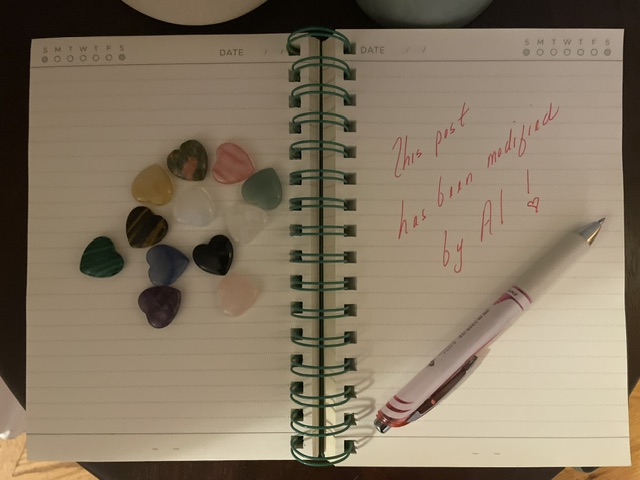
    ChatGPT defines manufactured fear as fear that is deliberately created, amplified, or encouraged by people or organizations rather than arising from an immediate threat. Its purpose is often simple: to influence behavior, opinions, and decisions.

    Why do I begin with that definition?

    Because I believe we are living in an era of manufactured fear.

    We live in a world where sweeping claims are often accepted without proof. Wars. The economy. Public health responses. Political labels. And perhaps most notably, the supposed imminent destruction of humanity through the advancement of Artificial Intelligence.

    Do I use AI?

    Abso-fucking-lutely.

    But I’m a different kind of person.

    As a Black person in America, I understand what it means to inherit fear. When your history includes bondage, suffering, terror, violence, and systemic oppression, and you’re reminded daily that progress can be reversed with the stroke of a pen, fear can become embedded in your psyche. You learn that danger is always lurking around the corner.

    Yet Scripture teaches me something different. It teaches me to fear God alone.

    So which voice should I listen to?

    I am a witness to God’s power. There is nothing AI, government, corporations, or any other institution can do that He does not permit. Because of that, I try to remain focused on truth rather than panic. And when I see relentless messaging designed to make people afraid of AI, I can’t help but ask whether the fear itself deserves scrutiny.

    In my book The Cult: A Black American Project and my companion novel Twenty-Four, I explore how my spiritual journey led me down the rabbit hole of institutional power. Along the way, I learned to ask two questions that have become central to how I evaluate almost everything:

    1. What is the goal?

    2. Who benefits from my fear?

      Those questions matter.

      When it comes to AI, the people and organizations that profit the most from the technology also shape much of the conversation around it. Meanwhile, many of us are being encouraged to view it primarily as a threat. If I become afraid of AI, I won’t learn it. If I don’t learn it, I won’t use it. And if I don’t use it, I place myself at a disadvantage compared to those who do.

      That doesn’t mean every concern about AI is invalid. It simply means I refuse to outsource my thinking.

      The media often focuses on AI replacing workers, disrupting industries, or transforming entertainment. Some of those concerns may prove legitimate. But I also recognize AI’s practical value. With the right vision, I can use it to help build a business, develop ideas, create systems, and launch projects that would have once required enormous amounts of time, money, and manpower.

      AI does not replace my creativity. It amplifies it.

      It does not replace human assistance. It reduces the barriers to getting started.

      So when I hear alarming claims, I return to those same questions: Who benefits from me believing them? Who benefits if I become too afraid to engage with the technology? Who benefits if entire communities decide they are better off avoiding the tools that are helping shape the future?

      Those are questions worth asking.

      For me, fear requires evidence. If there is no proof that I should be afraid, then what I’m being offered may be less about danger and more about persuasion.

      I’m not arguing that AI is perfect. Neither are human beings.

      What I am saying is this: until AI becomes self-aware, launches a nuclear war like The Terminator, or starts depriving Black and Brown communities of essential resources, I intend to use it the same way powerful institutions always have: as a tool.

      The difference is that I’m choosing not to be afraid of it first.

      Fear has always been one of the oldest tools of control. Convince a person to fear something, and you can often convince them to avoid it, surrender to it, or hand over their power because of it. But truth requires more of us. It requires curiosity. Discernment. Courage.

      I did not come this far in my spiritual journey to exchange one belief system for another. I came to ask questions. To seek truth wherever it leads. And until someone gives me a reason grounded in evidence rather than emotion, I will continue to do what I’ve always done: learn, adapt, create, and refuse to be governed by fear.

      Because God didn’t give me a spirit of fear.

      And I’m no longer interested in borrowing one from the world.

    1. Am I In Your Book?

      Am I In Your Book?

      “Am I in your book?”

      It’s a question I’ve been asked a few times. It’s also a question I’m sure others have wondered. The answer?

      Probably not.

      My memoir, The Cult: A Black American Project, isn’t a typical story. I don’t share my experiences with everyone who was a part of my life during that period. The only people I mention are those who had a profound effect on my spiritual journey in some way. Some influenced it positively. Some did not. Either way, they were significant in what began as a search for God and blossomed into a search for truth. As my eyes opened, the two became one and the same.

      This book is not about settling scores. It isn’t about exposing people. It isn’t about assigning heroes and villains. It’s about documenting a transformation.

      The truth is, most people who crossed my path during those years never make it onto the page. Not because they weren’t important, but because this story isn’t about everyone I knew. It’s about the moments, relationships, and experiences that altered the trajectory of my life. It’s about the people who challenged my beliefs, reinforced them, manipulated them, or helped dismantle them.

      Memory is a curious thing. We can live through the same event alongside someone else and carry away entirely different versions of what happened. What I share in this memoir is not the definitive account of anyone else’s life. It is simply my account of my own.

      The people who appear in these pages are there because they became part of a larger story, one that ultimately forced me to ask difficult questions about faith, identity, power, belonging, and truth. Their presence in the book says less about who they are and more about the role they played in my awakening.

      So if you’re wondering whether you’re in the book, the answer is still probably not.

      But if you helped shape the woman I became, if you redirected my path in a meaningful way, if you were present during a moment that changed how I saw God, myself, or the world, then perhaps a piece of you lives there.

      Not as the story.

      But as part of the journey.

    2. The Atoning: When the Search for Truth Becomes a Question of Identity

      The Atoning: When the Search for Truth Becomes a Question of Identity

      By exploring ancestry, citizenship, history, and institutional power, Chapter Fifteen of The Cult: A Black American Project moves beyond personal spirituality into one of the memoir’s most challenging questions: Who benefits when people do not know who they are?

      From Spiritual Awakening to Historical Inquiry

      Throughout The Cult, Shelley spends years wrestling with faith, authority, perception, and personal transformation. By the time readers arrive at “The Atoning,” her focus shifts toward something more concrete: history itself.

      After tracing portions of her family lineage, Shelley discovers a troubling reality. She can find fragments of her ancestry, but many family connections disappear into the historical void created by slavery. This absence leads her to ask larger questions about record-keeping, identity, and ownership. Why are some family histories preserved in detail while others remain fragmented? What records exist, and who controls access to them?

      Rather than viewing ancestry as merely cultural, Shelley begins viewing it through a legal and constitutional lens.

      The Question Beneath the Question

      One of the chapter’s central ideas is that identity itself may be a form of power.

      Shelley observes that enslaved people were documented as property, collateral, and economic assets. She reasons that if such records were once necessary for commerce, ownership, and compensation, then evidence of ancestral lineage must have existed somewhere within those systems.

      This realization leads her to a question that drives much of the chapter:

      If records existed to document ownership, what happened to the records needed to restore identity?

      The chapter is less concerned with providing answers than exposing what Shelley sees as a profound historical contradiction.

      A Different View of American History

      Shelley’s reflections challenge many established narratives.

      She examines slavery not only as a moral tragedy but also as an economic system. She considers the relationship between historical wealth, governmental records, ancestry, and citizenship. She questions why discussions of reparations often occur without equal emphasis on restoring lineage information and documented family origins.

      For Shelley, restoration begins with knowledge.

      Without knowing where people came from, she argues, it becomes difficult to fully understand what was lost.

      The Cult as a System

      Earlier in the memoir, the word cult refers largely to spiritual conditioning and institutional influence. In The Atoning, Shelley expands the concept.

      She begins comparing societal systems to cult dynamics—not through a single leader, but through institutions that shape belief, control narratives, and determine which questions are acceptable to ask.

      The concern is no longer simply religion or politics.

      It becomes the broader issue of authority itself:

      Who controls historical narratives?

      Who determines legitimacy?

      Which questions are encouraged?

      Which questions are dismissed?

      God, Accountability, and Atonement

      Despite its legal and historical themes, The Atoning remains deeply spiritual.

      Shelley believes true accountability cannot be avoided forever. Throughout the chapter, she returns repeatedly to the idea that institutions may shape narratives, but they cannot ultimately overturn truth itself. Her faith remains centered not on human authority but on divine authority.

      In Shelley’s view, atonement is larger than personal forgiveness. It involves confronting uncomfortable truths, examining inherited systems, and refusing to look away from difficult questions.

      Why This Chapter Matters

      The Atoning is arguably one of the memoir’s most provocative chapters because it bridges the personal and the political.

      What begins as one woman’s search for meaning evolves into an exploration of ancestry, historical memory, citizenship, justice, and identity. Whether readers agree with Shelley’s conclusions or not, the chapter invites them to examine assumptions they may never have questioned before.

      Ultimately, The Atoning asks a simple but profound question:

      Can a people fully understand their future if they are prevented from fully knowing their past?

      Leave your notes/comments in the margin.

    3. “They Reach Up for the Ground”: Understanding One of Twenty-Four’s Most Important Quotes

      “They Reach Up for the Ground”: Understanding One of Twenty-Four’s Most Important Quotes

      One of the most revealing lines in Twenty-Four appears during Ricky’s reflection on a lesson taught to him by his father:

      “Always remember, they reach up for the ground.”

      At first glance, the statement sounds contradictory. How can someone reach up for the ground? The answer lies at the heart of the novel’s exploration of power, conditioning, and social control.

      A Deliberate Contradiction

      Most people are familiar with the phrase “reach for the sky.” It symbolizes ambition, possibility, and the pursuit of something higher than one’s current circumstances.

      Ricky’s father’s quote reverses that idea.

      The point is not that Subjects lack ambition. In fact, many Subjects in Twenty-Four are ambitious, talented, intelligent, and hardworking. The point is that they have been conditioned to believe that certain limits are natural.

      As a result, even when they strive for success, they strive within boundaries that have already been established for them.

      In the Producer worldview, Subjects aren’t reaching for the sky.

      They’re reaching up for the ground.

      Power as the Control of Possibility

      The quote reveals an important theme in Twenty-Four: true power is not merely controlling people’s actions. True power is controlling what people believe is possible.

      A person who believes they can only rise to a certain level will rarely attempt to go beyond it.

      The system described throughout the novel works to define:

      What success looks like.

      What leadership looks like.

      What freedom looks like.

      What people should aspire to become.

      If those definitions are accepted without question, people become easier to manage.

      They may believe they are climbing upward when they are actually moving within boundaries established by others.

      The Difference Between Visibility and Power

      Another theme in Twenty-Four is the distinction between visible figures and those who operate behind the scenes.

      The novel repeatedly contrasts public figures—politicians, entertainers, activists, and other “Actors”—with the hidden structures directing events.

      From Ricky’s perspective, Subjects often mistake visibility for power.

      They may aspire to become:

      Celebrities

      Politicians

      Athletes

      Influencers

      Public leaders

      Yet Ricky believes those positions remain beneath the level occupied by the Producers.

      To him, Subjects are chasing symbols of power rather than power itself.

      That is what the quote means when viewed through his eyes.

      Why Shelley Is Different

      The significance of the quote becomes even clearer when compared to Shelley.

      The system is not particularly threatened by people who want recognition, wealth, or status. Those ambitions can be predicted, rewarded, and managed.

      Shelley represents something different.

      The reports identify her as dangerous because she demonstrates independent thought and resistance to social conditioning. She questions assumptions rather than accepting them.

      In other words, she is one of the few people who may eventually realize that the ground is not the sky.

      The Hidden Irony

      Perhaps the most important aspect of the quote is the irony embedded within it.

      Ricky sees the quote as proof of his superiority. He believes Subjects are trapped by their limited understanding of the world.

      But readers may begin to wonder whether Ricky suffers from the same blindness.

      He idolizes the Producers.

      He believes becoming a Producer is the ultimate achievement.

      He describes them as possessing “the power of God.”

      What if Ricky is also reaching up for the ground?

      What if the Producers are merely another level within a larger system they do not fully understand?

      That possibility transforms the quote from a statement about Subjects into a broader commentary on power itself.

      Final Thoughts

      “Always remember, they reach up for the ground” captures one of Twenty-Four‘s central ideas: people can be controlled most effectively when they are taught to mistake limitation for possibility.

      The quote is not really about intelligence, talent, or effort. It is about perception. It suggests that the greatest form of power is the ability to define the boundaries of another person’s imagination.

      And the moment someone begins questioning those boundaries is the moment they become dangerous to the system.