Blog

  • Saken

    Saken

    Your name rhymes with salacious

    The subject and predicate of the joke

    You never hear them laugh

    Because your own drowns them out

    If you’re lucky enough

    You’ll achieve the greatest wealth

    But rest you’ll never receive

    You’ll feed the thief from your grave.

  • Fear, Competition, and AI: Are We Asking the Wrong Questions?

    Fear, Competition, and AI: Are We Asking the Wrong Questions?

    Will AI deplete water resources?

    Will AI increase your electricity bill?

    Will AI drastically reduce available jobs?

    Is AI the most dangerous technology humanity has ever created?

    Perhaps.

    I’m not here to argue that Artificial Intelligence is incapable of causing serious consequences. Every transformative technology in human history has come with risks, tradeoffs, and unintended effects. AI is no exception.

    What I am here to ask is a simpler question:

    Where is the evidence of causation?

    Too often, the conversation around AI is driven by assumptions rather than proof. A data center appears in a community. Electricity prices rise. Headlines connect the dots and declare AI the culprit.

    But correlation is not causation.

    Did the data center cause the increase? Maybe.

    Did broader infrastructure costs, energy markets, population growth, or policy decisions contribute? Maybe.

    The point is not that AI is innocent. The point is that many of the loudest warnings fail to prove what they claim. We are frequently presented with outcomes, but not the evidence that directly links those outcomes to AI itself.

    That distinction matters.

    What I find even more interesting is who often shapes the narrative surrounding Artificial Intelligence. Many of the loudest voices discussing AI’s dangers are deeply involved in creating, funding, or profiting from AI.

    That raises an uncomfortable question:

    What is the benefit of making people afraid to use it?

    Consider an independent artist.

    The algorithms of social media will often flood that artist with stories about AI stealing voices, imitating styles, and replacing creativity. The message is clear: AI is a threat.

    Yet much of that fear ignores practical realities.

    Using another artist’s work without permission can create copyright issues. More importantly, AI cannot stand on a stage and create a genuine human connection with an audience. It cannot live the experiences that inspire art in the first place.

    What receives far less attention is how AI can empower creators.

    An artist can upload a contract and have AI explain, in plain language, exactly what they’re agreeing to.

    They can use AI to identify unfavorable terms that would otherwise be buried in legal jargon.

    They can receive guidance when negotiating better royalty structures and ownership agreements.

    They can draft stronger contracts.

    They can better understand their intellectual property rights.

    They can protect their work instead of unknowingly surrendering it.

    Most importantly, they can gain tools that were once available only to those who could afford lawyers, consultants, or industry insiders.

    All within minutes.

    The conversation around AI often focuses on what it might take away. Far less attention is given to what it can give back.

    For creators, entrepreneurs, and everyday people, AI is not simply a machine that generates images or mimics voices. It can be a tool for understanding systems that were previously opaque. It can reduce information barriers. It can help individuals make decisions from a position of knowledge rather than dependence.

    That brings me back to the question:

    Why encourage fear?

    My answer is simple: competition.

    A well-informed person is harder to exploit. A creator who understands contracts is harder to underpay. A business owner who can access expert-level analysis is harder to outmaneuver. A worker who can multiply their productivity is harder to ignore.

    AI’s true disruption may not be that it replaces people.

    It may be that it empowers them.

    None of this means AI is flawless. It isn’t. Like any tool created by humans, it reflects both strengths and weaknesses. It can be misused. It can make mistakes. It deserves scrutiny.

    But scrutiny is not the same thing as fear.

    If we spend all our time debating hypothetical dangers that remain unproven, we risk overlooking the very real opportunities already sitting in front of us.

    And while the public is distracted by fear, others are busy learning, adapting, and gaining an advantage.

    The question is no longer whether AI has flaws.

    The question is whether those flaws are being exaggerated to keep people from discovering its power.

    Because the greatest threat AI poses may not be to jobs, industries, or society.

    It may be to systems that depend on people remaining uninformed, dependent, and easy to control.

    Those who learn to use AI will not simply compete differently.

    They will compete from a position of ownership.

    And ownership has always been far more powerful than fear.

  • The Business of Fear

    The Business of Fear

    ChatGPT defines manufactured fear as fear that is deliberately created, amplified, or encouraged by people or organizations rather than arising from an immediate threat. Its purpose is often simple: to influence behavior, opinions, and decisions.

    Why do I begin with that definition?

    Because I believe we are living in an era of manufactured fear.

    We live in a world where sweeping claims are often accepted without proof. Wars. The economy. Public health responses. Political labels. And perhaps most notably, the supposed imminent destruction of humanity through the advancement of Artificial Intelligence.

    Do I use AI?

    Abso-fucking-lutely.

    But I’m a different kind of person.

    As a Black person in America, I understand what it means to inherit fear. When your history includes bondage, suffering, terror, violence, and systemic oppression, and you’re reminded daily that progress can be reversed with the stroke of a pen, fear can become embedded in your psyche. You learn that danger is always lurking around the corner.

    Yet Scripture teaches me something different. It teaches me to fear God alone.

    So which voice should I listen to?

    I am a witness to God’s power. There is nothing AI, government, corporations, or any other institution can do that He does not permit. Because of that, I try to remain focused on truth rather than panic. And when I see relentless messaging designed to make people afraid of AI, I can’t help but ask whether the fear itself deserves scrutiny.

    In my book The Cult: A Black American Project and my companion novel Twenty-Four, I explore how my spiritual journey led me down the rabbit hole of institutional power. Along the way, I learned to ask two questions that have become central to how I evaluate almost everything:

    1. What is the goal?

    2. Who benefits from my fear?

      Those questions matter.

      When it comes to AI, the people and organizations that profit the most from the technology also shape much of the conversation around it. Meanwhile, many of us are being encouraged to view it primarily as a threat. If I become afraid of AI, I won’t learn it. If I don’t learn it, I won’t use it. And if I don’t use it, I place myself at a disadvantage compared to those who do.

      That doesn’t mean every concern about AI is invalid. It simply means I refuse to outsource my thinking.

      The media often focuses on AI replacing workers, disrupting industries, or transforming entertainment. Some of those concerns may prove legitimate. But I also recognize AI’s practical value. With the right vision, I can use it to help build a business, develop ideas, create systems, and launch projects that would have once required enormous amounts of time, money, and manpower.

      AI does not replace my creativity. It amplifies it.

      It does not replace human assistance. It reduces the barriers to getting started.

      So when I hear alarming claims, I return to those same questions: Who benefits from me believing them? Who benefits if I become too afraid to engage with the technology? Who benefits if entire communities decide they are better off avoiding the tools that are helping shape the future?

      Those are questions worth asking.

      For me, fear requires evidence. If there is no proof that I should be afraid, then what I’m being offered may be less about danger and more about persuasion.

      I’m not arguing that AI is perfect. Neither are human beings.

      What I am saying is this: until AI becomes self-aware, launches a nuclear war like The Terminator, or starts depriving Black and Brown communities of essential resources, I intend to use it the same way powerful institutions always have: as a tool.

      The difference is that I’m choosing not to be afraid of it first.

      Fear has always been one of the oldest tools of control. Convince a person to fear something, and you can often convince them to avoid it, surrender to it, or hand over their power because of it. But truth requires more of us. It requires curiosity. Discernment. Courage.

      I did not come this far in my spiritual journey to exchange one belief system for another. I came to ask questions. To seek truth wherever it leads. And until someone gives me a reason grounded in evidence rather than emotion, I will continue to do what I’ve always done: learn, adapt, create, and refuse to be governed by fear.

      Because God didn’t give me a spirit of fear.

      And I’m no longer interested in borrowing one from the world.

    1. Am I In Your Book?

      Am I In Your Book?

      “Am I in your book?”

      It’s a question I’ve been asked a few times. It’s also a question I’m sure others have wondered. The answer?

      Probably not.

      My memoir, The Cult: A Black American Project, isn’t a typical story. I don’t share my experiences with everyone who was a part of my life during that period. The only people I mention are those who had a profound effect on my spiritual journey in some way. Some influenced it positively. Some did not. Either way, they were significant in what began as a search for God and blossomed into a search for truth. As my eyes opened, the two became one and the same.

      This book is not about settling scores. It isn’t about exposing people. It isn’t about assigning heroes and villains. It’s about documenting a transformation.

      The truth is, most people who crossed my path during those years never make it onto the page. Not because they weren’t important, but because this story isn’t about everyone I knew. It’s about the moments, relationships, and experiences that altered the trajectory of my life. It’s about the people who challenged my beliefs, reinforced them, manipulated them, or helped dismantle them.

      Memory is a curious thing. We can live through the same event alongside someone else and carry away entirely different versions of what happened. What I share in this memoir is not the definitive account of anyone else’s life. It is simply my account of my own.

      The people who appear in these pages are there because they became part of a larger story, one that ultimately forced me to ask difficult questions about faith, identity, power, belonging, and truth. Their presence in the book says less about who they are and more about the role they played in my awakening.

      So if you’re wondering whether you’re in the book, the answer is still probably not.

      But if you helped shape the woman I became, if you redirected my path in a meaningful way, if you were present during a moment that changed how I saw God, myself, or the world, then perhaps a piece of you lives there.

      Not as the story.

      But as part of the journey.

    2. The Joys of Growing Up Black in a Two-Parent Household

      The Joys of Growing Up Black in a Two-Parent Household

      I grew up in Cabrini-Green, a notorious public housing project in Chicago, Illinois. Gunshots cut through the crisp night air. Metal chains on the playground swings squeaked over and over again. The smell of urine lingered in the hallways. And there was always the fear of getting stuck in an elevator with no on-site maintenance person to get you out. To this day, I still carry a slight fear of elevators. These were my living conditions growing up in a poverty-stricken community.

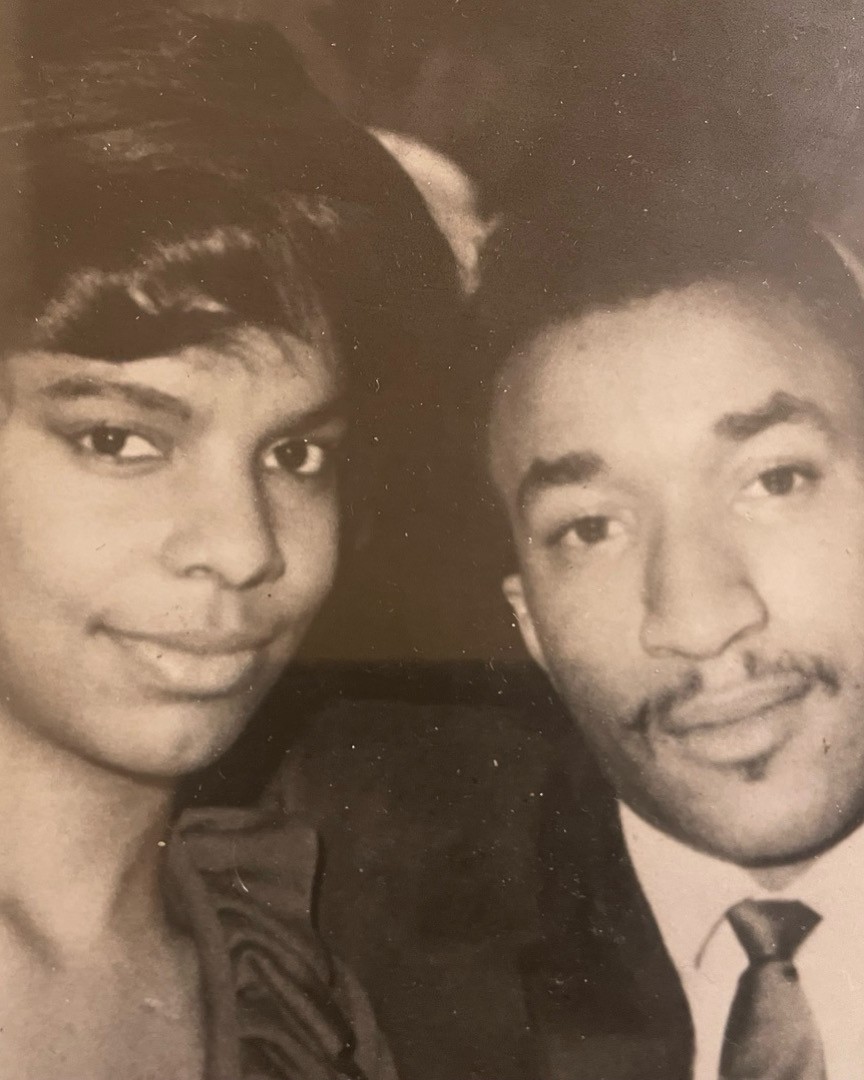
      We knew our neighbors. Not in a borrowing-sugar kind of way. More so in a shared-survival, communal-dismay kind of way. I can’t say I knew everybody the way my older brother did. I was much more sheltered than he was. But I was the only girl. My mama’s “Win,” short for “Winnie,” and my daddy’s “Pooh.” My parents did not have the best relationship with each other, but what they gave me was invaluable: two Black biological parents living together in the projects.

      We were the real-life version of Good Times, sans Michael. My brother was more of a J.J.—not just because he was the oldest and just as attention-seeking, but because he was Jonah Jr. And I was the young Black girl with parents who cared about my education and my future. Not to mention, I loved dancing. I was definitely a teeny version of Thelma.

      My parents raised me to believe I was born for a special reason. That one day I would see my name in lights. That I would be in the newspaper. The newspaper part happened. I can’t say their ideas about me have fully actualized, but they planted a seed that, to this day, I continue to grow into. I water it. I prune it. I revive it when its leaves start to wither. I never fully allow it to die. I keep reaching for the purpose they instilled in me. I didn’t know it when I was young, but those times when my daddy would put me on the cocktail table and do the bump with me to the gruff sound of Joe Tex would be etched into my soul forever. Subconsciously, being loved by both of my parents in the same household, despite our conditions, gave me a different perspective than some of the people around me. I dug into literature, rhythm, and movement. My thoughts became malleable. Apologies were not that hard. Watching my mother care for my father, even when it was obvious she was not madly in love with him, released me from bitterness whenever love went sour. My parents loved me in a quiet way.

      Almost fifty-three years, two divorces, and three adult children later, my life is still wide open. That seed is still growing. What once existed as the hopeful words of two Black parents in a tiny apartment in Cabrini-Green has become the framework of my life.

      All of it came from them. Not money. Not privilege. Not perfect circumstances. Just love, belief, and the quiet insistence that I was here for a reason.

      That little girl they raised has become my why. Every story I write, every vision I chase, every challenge I survive is connected to the foundation they gave me. The world may have seen the projects. My parents saw possibility.

      And because they did, I’ll never waste a day becoming exactly who they told me I am.