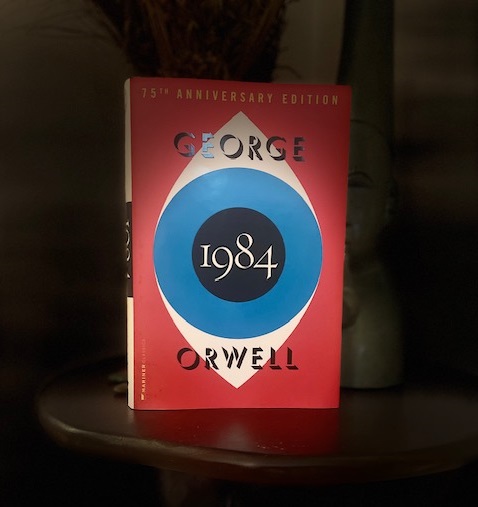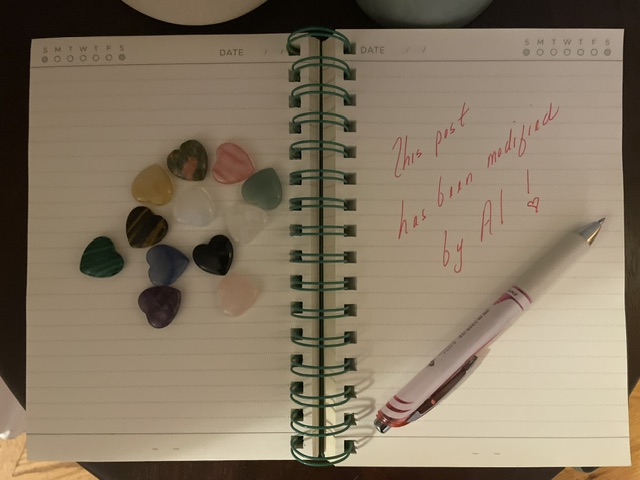
ChatGPT defines manufactured fear as fear that is deliberately created, amplified, or encouraged by people or organizations rather than arising from an immediate threat. Its purpose is often simple: to influence behavior, opinions, and decisions.
Why do I begin with that definition?
Because I believe we are living in an era of manufactured fear.
We live in a world where sweeping claims are often accepted without proof. Wars. The economy. Public health responses. Political labels. And perhaps most notably, the supposed imminent destruction of humanity through the advancement of Artificial Intelligence.
Do I use AI?
Abso-fucking-lutely.
But I’m a different kind of person.
As a Black person in America, I understand what it means to inherit fear. When your history includes bondage, suffering, terror, violence, and systemic oppression, and you’re reminded daily that progress can be reversed with the stroke of a pen, fear can become embedded in your psyche. You learn that danger is always lurking around the corner.
Yet Scripture teaches me something different. It teaches me to fear God alone.
So which voice should I listen to?
I am a witness to God’s power. There is nothing AI, government, corporations, or any other institution can do that He does not permit. Because of that, I try to remain focused on truth rather than panic. And when I see relentless messaging designed to make people afraid of AI, I can’t help but ask whether the fear itself deserves scrutiny.
In my book The Cult: A Black American Project and my companion novel Twenty-Four, I explore how my spiritual journey led me down the rabbit hole of institutional power. Along the way, I learned to ask two questions that have become central to how I evaluate almost everything:
1. What is the goal?
2. Who benefits from my fear?
Those questions matter.
When it comes to AI, the people and organizations that profit the most from the technology also shape much of the conversation around it. Meanwhile, many of us are being encouraged to view it primarily as a threat. If I become afraid of AI, I won’t learn it. If I don’t learn it, I won’t use it. And if I don’t use it, I place myself at a disadvantage compared to those who do.
That doesn’t mean every concern about AI is invalid. It simply means I refuse to outsource my thinking.
The media often focuses on AI replacing workers, disrupting industries, or transforming entertainment. Some of those concerns may prove legitimate. But I also recognize AI’s practical value. With the right vision, I can use it to help build a business, develop ideas, create systems, and launch projects that would have once required enormous amounts of time, money, and manpower.
AI does not replace my creativity. It amplifies it.
It does not replace human assistance. It reduces the barriers to getting started.
So when I hear alarming claims, I return to those same questions: Who benefits from me believing them? Who benefits if I become too afraid to engage with the technology? Who benefits if entire communities decide they are better off avoiding the tools that are helping shape the future?
Those are questions worth asking.
For me, fear requires evidence. If there is no proof that I should be afraid, then what I’m being offered may be less about danger and more about persuasion.
I’m not arguing that AI is perfect. Neither are human beings.
What I am saying is this: until AI becomes self-aware, launches a nuclear war like The Terminator, or starts depriving Black and Brown communities of essential resources, I intend to use it the same way powerful institutions always have: as a tool.
The difference is that I’m choosing not to be afraid of it first.
Fear has always been one of the oldest tools of control. Convince a person to fear something, and you can often convince them to avoid it, surrender to it, or hand over their power because of it. But truth requires more of us. It requires curiosity. Discernment. Courage.
I did not come this far in my spiritual journey to exchange one belief system for another. I came to ask questions. To seek truth wherever it leads. And until someone gives me a reason grounded in evidence rather than emotion, I will continue to do what I’ve always done: learn, adapt, create, and refuse to be governed by fear.
Because God didn’t give me a spirit of fear.
And I’m no longer interested in borrowing one from the world.